
I’m so tired of seeing people spend hundreds of dollars on “smart” mattresses and weighted blankets that promise to fix their lives, only to end up staring at the ceiling at 3:00 AM anyway. Most of the advice you find online regarding sleep hygiene tips feels like it was written by someone who has never actually experienced a burnout-induced midnight panic. It’s all too much gear and not enough logic. You don’t need a $2,000 sleep system; you need to stop treating your bedroom like a second office and start treating your circadian rhythm like the critical piece of hardware it actually is.
I’m not here to sell you a lifestyle overhaul or a subscription to a meditation app. Instead, I’m going to give you the exact, low-friction adjustments I used to stop my brain from spinning the second my head hit the pillow. We’re going to focus on small, actionable tweaks to your environment and your routine that actually move the needle. No fluff, no expensive gadgets—just a few systematic changes to help you finally wake up feeling like a functional human being.
Table of Contents
Optimizing Your Sleep Environment for Zero Friction
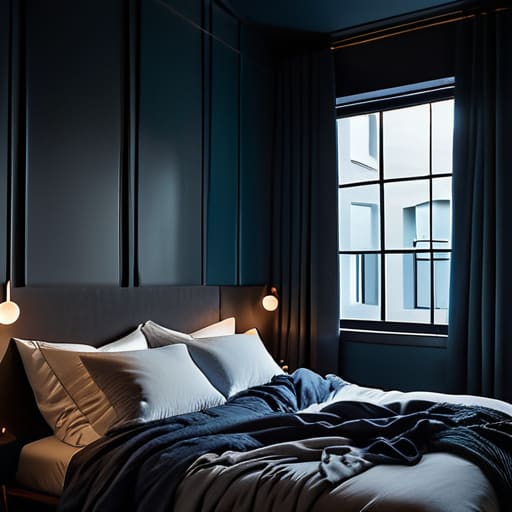
Think of your bedroom like a server room: it needs to be cool, dark, and quiet to function properly. If your room is a chaotic mess of clutter or stays lit by a buzzing streetlamp outside, you’re essentially running your brain on a glitchy OS. I spent years trying to “force” myself to sleep in a room that felt more like a second office. The fix wasn’t more willpower; it was optimizing my sleep environment to remove the friction. Invest in some decent blackout curtains and keep the thermostat around 65–68 degrees. Your body temperature needs to drop to trigger sleep, and fighting a stuffy, bright room is a losing battle.
The biggest system killer, though, is your tech. We all know the drill, but the science is hard to ignore: constant blue light exposure and sleep disruption are real. That late-night scroll through your feed isn’t just wasting time; it’s actively suppressing your melatonin production. If you can’t ditch the phone entirely, at least automate the solution. Set your devices to warm mode at sunset and get a dedicated alarm clock so your phone can live across the room. It’s a small tweak, but it’s the most effective way to protect your circadian rhythm regulation without needing a PhD.
The Real Cost of Sleep Deprivation Consequences

We often treat sleep like a luxury or something we can just “catch up on” during the weekend. But as someone who spent years trying to power through 4:00 AM coding sessions on nothing but caffeine, I’ve learned the hard way that you can’t outrun biology. The real sleep deprivation consequences aren’t just about feeling groggy; they hit your cognitive processing and emotional stability. When you’re running on empty, your brain’s ability to solve even basic problems tanks, and your patience for small daily frictions—the kind I spend my life trying to eliminate—disappears entirely.
It’s a systemic failure. When you neglect your rest, you aren’t just tired; you’re actively disrupting your circadian rhythm regulation. This creates a feedback loop where your body forgets how to signal when it’s time to shut down, making it even harder to fall asleep the following night. You end up stuck in a cycle of low-level brain fog that makes every task feel twice as heavy as it actually is. We aren’t looking for superhuman performance here, but we do need to stop sabotaging our own hardware. If your internal system is crashing every afternoon, it’s time to stop treating sleep as an optional setting.
The Daily Protocol: 5 Small Tweaks to Fix Your Sleep System

- Stop the caffeine creep. I used to think a 3 PM espresso was fine, but it was wrecking my ability to actually shut down at night. Try to draw a hard line at noon; if you need a ritual, switch to herbal tea. It’s a small change that prevents that wired-but-tired feeling.
- Build a “buffer zone” into your evening. You can’t expect your brain to flip from high-speed problem-solving to deep sleep in five minutes. Give yourself thirty minutes of zero-input time—no news, no emails, no intense scrolling. Just let your system idle down.
- Stop treating your bed like a secondary office or a cinema. If you spend your day working on your laptop in bed, your brain starts to associate that space with stress and alertness. Keep the bed for sleep and nothing else. It’s about training your subconscious to recognize one specific trigger: rest.
- Get some sunlight in your eyes early. It sounds like some wellness influencer nonsense, but it’s actually just basic biology. Getting natural light in the morning helps set your circadian rhythm, making it much easier to feel naturally tired when the sun goes down.
- Fix your “digital sunset.” I’m not going to tell you to throw your phone in a lake, but I will say this: turn on the blue light filter and set your device to grayscale an hour before bed. It makes the screen significantly less stimulating and breaks the dopamine loop that keeps you scrolling.
The Systemic View of Rest
“Sleep isn’t a reward you earn at the end of a long day; it’s the operating system that runs everything else. If your hardware is crashing every night, no amount of caffeine or willpower is going to fix your productivity.”
Nathaniel 'Nate' Brooks
Getting the System Online
At the end of the day, fixing your sleep isn’t about buying a thousand-dollar mattress or following some complex biohacking protocol that requires a PhD. It’s about the basics: cooling down your room, ditching the blue light before bed, and respecting your body’s natural rhythm. We’ve looked at how a chaotic environment sabotages your rest and how much that cognitive tax actually costs you during your working hours. If you can just automate a few of these small shifts—like setting a phone curfew or prepping your space the night before—you’re effectively removing the friction that keeps you tossing and turning.
Look, I’m not asking you to become a monk or live a perfectly disciplined life. I know how messy real life gets. But I also know that when your foundation is shaky, everything else—your work, your relationships, even your hobbies—starts to feel like an uphill battle. Don’t try to overhaul everything by Monday morning. Just pick one thing from this list and nail it. Once that feels like second nature, add another. We aren’t looking for a flawless streak; we’re just building a more efficient version of you, one night at a time.
Frequently Asked Questions
What if I can't fall asleep without scrolling through my phone for a bit?
Look, I get it. I’ve been there—staring at a blue-light screen at 1 AM because it’s the only way to shut my brain off. But you aren’t relaxing; you’re just stimulating your nervous system. If you can’t quit cold turkey, try a bridge. Switch to an e-reader with a warm tint or listen to a low-stakes podcast. You need to decouple “winding down” from “scrolling.” Stop feeding the dopamine loop.
How much of a difference does a specific temperature actually make for deep sleep?
It makes a massive difference. Think of your body temperature like a system process: to initiate the “sleep” sequence, your core temp needs to drop. If your room is too warm, your body stays in a state of thermal regulation instead of drifting into deep sleep. Aim for around 65°F (18°C). It sounds chilly, but dropping that temperature is one of the easiest ways to reduce friction and stop tossing and turning.
Is it worth investing in expensive blackout curtains, or are there cheaper ways to fix a bright room?
Look, I’m all for investing in gear that works, but you don’t need to drop $200 on heavy velvet drapes to fix this. If you’re on a budget, grab some high-quality blackout window film or even a cheap sleep mask—it’s a total game-changer for zero cost. If you really want the curtains, just make sure they’re side-sealed. Otherwise, you’re just paying for decor, not darkness. Optimize for the result, not the price tag.
Can I actually fix my sleep schedule if I've been a night owl for years, or am I stuck?
Look, I get it. You feel like your internal clock is hardwired into a different timezone. But here’s the truth from a systems perspective: your circadian rhythm isn’t a permanent installation; it’s a set of recurring processes. You aren’t stuck, but you can’t just flip a switch overnight. It’s about incremental shifts. Move your bedtime back by 15 minutes every few days. It’s slow, it’s boring, but it works.