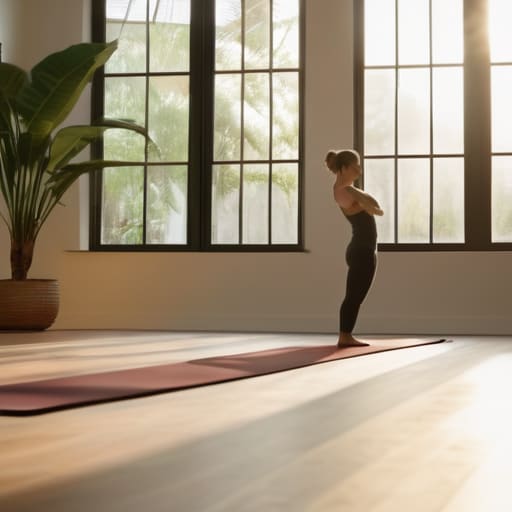
Look, I’m going to be blunt: you don’t need a $150 subscription to a guided meditation app or a specialized yoga mat to make your body feel functional in the morning. For years, I fell for the hype, thinking I needed a complex, thirty-minute ritual just to stop my lower back from screaming the moment I sat down at my desk. But the truth is, most of those “wellness influencers” are just selling you noise. Real morning stretches aren’t about achieving a perfect lotus position or finding your inner zen; they are about eliminating the physical friction that makes your first two hours of work feel like an uphill battle.
I’m not here to give you a flow that requires a degree in gymnastics. Instead, I’m going to share the exact, low-effort movements I’ve distilled through years of trial, error, and way too much time spent hunched over a keyboard. My goal is to give you a few no-nonsense adjustments that take less than five minutes but actually move the needle. We aren’t aiming for a total body transformation here; we’re just aiming to make sure you aren’t fighting your own anatomy before you’ve even had your first cup of coffee.
Table of Contents
Why You Need Stretches for Stiff Muscles First Thing

Look, I get it. When the alarm goes off, the last thing most of us want to do is roll out of bed and start moving. But after years of sitting at a desk staring at systems logs, I realized that my body wasn’t just tired—it was literally stuck. When you sleep, your muscles tighten up and your joints lose that fluid, easy movement. If you try to jump straight into a high-stress workday without addressing that stiffness, you’re basically trying to run a complex program on hardware that hasn’t even finished booting up yet.
That’s where a bit of gentle morning movement routine comes in. It isn’t about hitting a personal best in a yoga class; it’s about signaling to your nervous system that it’s time to wake up. By incorporating specific stretches for stiff muscles, you’re essentially lubricating the gears. You’re increasing blood flow and helping with improving flexibility after sleep, which prevents that nagging, tight sensation in your lower back or neck that usually hits around 11:00 AM. It’s a small investment of time that prevents a massive amount of physical friction later in the day.
Improving Flexibility After Sleep Without the Chaos
Look, I’m not here to tell you to roll out a mat and perform a forty-minute ritual before the sun is even up. That’s a recipe for burnout, not balance. When I was first trying to figure out improving flexibility after sleep, I made the mistake of treating it like a workout. I’d try to push through the tightness, which only made me feel more wound up. The trick is to treat your body like a piece of vintage hardware that needs to warm up before you run any heavy software. You aren’t looking for a deep, intense session; you’re just looking to grease the gears.
Instead of a complex routine, focus on a gentle morning movement routine that flows with your natural rhythm. Think of it as a low-friction way to signal to your nervous system that it’s time to wake up. I personally prefer starting with some simple, seated rotations or light reaches while my coffee is brewing. It’s about incremental gains. If you focus on small, consistent movements rather than trying to hit a new personal best every Tuesday, you’ll find that the stiffness starts to dissipate without the mental overhead of a massive fitness commitment.
My Low-Friction Routine for Getting Moving

- Keep it simple with dynamic movement. Skip the intense, static holds right out of bed; your muscles are cold and tight. Instead, think gentle rotations—arm circles or hip tilts—to signal to your nervous system that the day has actually started.
- Use your environment to your advantage. If getting on a yoga mat feels like too much of a hurdle at 6:30 AM, just do a few standing calf stretches while your coffee is brewing. If it’s not easy, you won’t do it.
- Focus on the “Big Three” tension points. Most of us carry our stress in our neck, hips, and lower back. If you only have three minutes, spend them there. Releasing those specific spots provides the highest ROI for your physical comfort.
- Don’t ignore your breathing. It sounds cliché, but if you’re holding your breath while stretching, you’re just adding more tension to an already stressed system. Deep, rhythmic breaths help transition you from sleep mode to active mode without the spike in cortisol.
- Set a “floor” for your habit. On days when you’re running late or just not feeling it, don’t scrap the whole routine. Just do one single stretch—maybe a quick overhead reach—and call it a win. Maintaining the system is more important than the intensity of the session.
The Logic of the Morning Stretch
Think of your body like a vintage synth I’m restoring; you can’t just flip the power switch and expect it to play a perfect melody immediately. You have to let the components warm up first. Stretching isn’t about hitting a yoga pose for Instagram; it’s about clearing the mechanical friction so you aren’t fighting your own stiffness before you’ve even had your coffee.
Nathaniel 'Nate' Brooks
Stop Overthinking the Routine

Look, you don’t need a forty-minute yoga flow or a fancy subscription to a wellness app to make this work. We’ve covered why your muscles are seizing up after eight hours of stillness and how to navigate that initial stiffness without turning your morning into a chaotic chore. The goal here isn’t to become a professional contortionist; it’s about reducing the friction between waking up and actually feeling functional. Whether you’re doing a simple seated twist or just reaching for the ceiling while the coffee brews, the objective is to signal to your nervous system that the day has officially started. Keep the movements simple, consistent, and low-stakes.
At the end of the day, I’m a big believer in systems, but I’m also a realist. Some mornings you’ll feel like a well-oiled machine, and other mornings you’ll feel like a rusted-out vintage synth that needs a complete overhaul. That’s fine. Don’t let the pursuit of a perfect routine become another source of stress in your life. Just show up for yourself in these small, five-minute increments. If you can optimize even just the first ten minutes of your day, you’ve already won half the battle. Now, go grab your coffee and stop fighting your own body.
Frequently Asked Questions
How long do I actually need to do this before I start feeling a difference?
Look, I’m not going to sell you some “miracle overnight” nonsense. If you’re looking for a quick fix, you’re looking in the wrong place. You’ll likely feel a bit less like a rusted hinge after the first few days, but the real shift happens when you stop treating it like a chore and start treating it like a system. Stick with it for two weeks of consistent, low-friction movement. That’s usually when the stiffness stops being your default setting.
Can I do these stretches in bed, or do I need to be up and moving?
Look, if you’re looking for a reason to stay under the covers, I get it. Honestly, you can absolutely do these in bed. In fact, for some of these, staying horizontal helps you focus on the stretch without worrying about balance. But once you’ve loosened up the big muscle groups, get up. Moving through your space adds a layer of functional mobility that a mattress just can’t replicate. Start in bed, then transition to the floor.
What should I do if I feel a sharp pain instead of just a light pull?
Stop immediately. There’s a massive difference between that “good” tension of a muscle lengthening and a sharp, stabbing sensation. If you feel a spike of pain, your body isn’t asking for more stretch; it’s sending an error code. Don’t try to “power through” it—that’s how a minor tightness turns into a week-long injury. Back off, find a neutral position, and if it doesn’t settle, get it checked out. Safety first, optimization second.
Do I need to buy any equipment, or can I just use what I have around the house?
Look, if you’re waiting for a high-end yoga mat or a set of resistance bands to arrive in the mail before you start, you’re just creating more friction. You don’t need it. Honestly, a thick towel on the carpet works fine, and a sturdy chair or the edge of your bed is plenty for most mobility work. Keep it simple. The goal is to move, not to build a home gym you’ll eventually stop using.