
I used to think mindful eating was just another expensive wellness trend designed to make you sit in silence with a single organic blueberry while a life coach breathes heavily in the background. As someone who lives by spreadsheets and optimized workflows, the idea of “spiritual connection to food” sounded like a massive waste of time. But the truth is, I wasn’t failing at being “zen”; I was just failing at my own systems. I’d find myself staring at an empty takeout container at my desk, wondering where the last twenty minutes went and why I still felt completely unsatisfied.
I’m not here to sell you on a lifestyle overhaul or tell you to meditate over every morsel. Instead, I want to show you how to integrate mindful eating into a busy, high-friction life without it feeling like another chore on your to-do list. I’m going to share the small, practical adjustments I used to stop the mindless snacking and actually reclaim my relationship with food. We aren’t aiming for some perfect, enlightened state; we’re just aiming to eliminate the midday chaos so you can actually enjoy your fuel.
Table of Contents
Mastering Your Hunger and Fullness Cues

Most of us have become experts at ignoring our bodies. We eat because the clock says it’s noon, or because we’re stressed, or simply because there’s a bag of chips sitting on the desk. To fix this, you have to start paying attention to your actual hunger and fullness cues. It’s not about following a strict calorie count; it’s about learning the difference between “I’m bored” and “my body actually needs fuel.” I used to be the guy who would power through a spreadsheet and realize two hours later that I’d inhaled an entire pizza without even tasting it. Now, I try to check in with myself before I reach for a snack. Is there a physical sensation in my stomach, or am I just looking for a hit of dopamine?
Once you start recognizing those signals, the next step is slowing down. This is where sensory awareness during meals comes into play. Instead of scrolling through my phone or watching a video while I eat, I try to actually notice the texture and the flavor of the food. It sounds a bit “woo-woo,” but it works. When you focus on the meal itself, you give your brain the necessary time to register that you’re actually satisfied. It’s a simple way to stop the cycle of overeating before it even starts.
Why Sensory Awareness During Meals Changes Everything

Most of us treat eating like a background process—something we do while scrolling through emails or watching a show. We’re essentially running on autopilot, which is a recipe for feeling bloated and unsatisfied. When you actually lean into sensory awareness during meals, you’re forcing your brain to reconnect with your body. I started doing this a few years ago when I realized I couldn’t even remember the taste of my dinner by the time I hit the couch. By focusing on the texture of the food, the temperature, and even the specific spices used, you turn a mindless habit into a deliberate experience.
This isn’t just about enjoying your food more, though; it’s about the physiological feedback loop. When you stop the multitasking, you start noticing the subtle shifts in your stomach that signal you’ve actually had enough. One of the biggest mindful eating benefits for digestion is that it naturally slows your pace, giving your body the time it needs to process everything properly. It’s much harder to overeat when you’re actually paying attention to the way your food feels. It’s a simple system tweak, but it’s one of the most effective ways to stop the mid-meal chaos and regain control over your habits.
Five Low-Friction Ways to Reset Your Relationship with Food
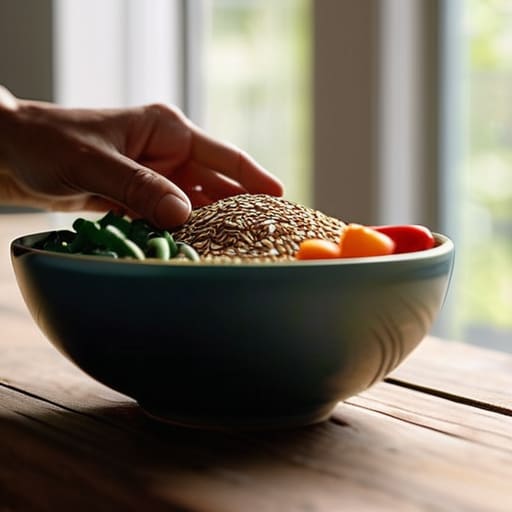
- Kill the distractions. If you’re eating while scrolling through emails or watching a YouTube video, you aren’t actually eating—you’re just refueling while your brain is somewhere else. Put the phone in another room. Even if it’s just for fifteen minutes, give your brain a chance to register that food is actually entering your system.
- The “Two-Minute Pause” rule. Halfway through your meal, physically put your fork down on the table. Take a breath, look around, and check in with your stomach. Most of us inhale our food so fast we miss the exact moment we shift from “hungry” to “satisfied,” and that’s usually when the overeating starts.
- Stop the “all-or-nothing” mindset. If you find yourself halfway through a bag of chips because you “already ruined the diet,” stop. One bad choice isn’t a system failure; it’s just a data point. Just make the very next decision a better one. You don’t need a perfect streak to have a healthy routine.
- Texture and temperature matter. When you’re rushing, everything just becomes “fuel.” Try to actually notice the crunch of the salad or the warmth of the soup. It sounds a bit hippy-dippy, but treating a meal like a sensory experience rather than a task to check off actually helps your brain signal satiety much faster.
- Build a “buffer zone” before you snack. When the urge to graze hits, wait ten minutes. Ask yourself if you’re actually hungry or if you’re just bored, stressed, or tired. Often, we use food to solve problems that food can’t fix—like a bad afternoon at work or a dip in energy. Check the system before you execute the command.
The Systemic Shift
“Mindful eating isn’t some lofty spiritual practice; it’s just basic systems optimization. If you stop treating your lunch like a background task to be completed while you’re scrolling through emails, you’ll actually stop fighting your own body for control.”
Nathaniel 'Nate' Brooks
Cutting Through the Noise

Look, I’m not suggesting you turn every single meal into a meditative ritual or start journaling about your kale salad. That’s not sustainable, and frankly, it sounds exhausting. My point is that by simply tuning into your actual hunger cues and actually tasting what’s on your plate, you stop the cycle of mindless consumption. When you move away from the autopilot mode of eating over a keyboard or scrolling through your phone, you reclaim control over your energy and your digestion. It’s about shifting from a reactive state to a deliberate one, ensuring that food serves its purpose without turning your midday break into a chaotic, unexamined event.
At the end of the day, this isn’t about achieving some impossible standard of dietary perfection. We all have days where we grab a quick slice of pizza and inhale it in three minutes flat. That’s fine. The goal is to build a system that allows you to notice when you’re drifting off course so you can steer back. Don’t let the pursuit of the “perfect” habit prevent you from making the small, incremental improvements that actually stick. Just aim to be a little more present at your next meal than you were at your last. Small adjustments, better results.
Frequently Asked Questions
How do I actually do this when I'm stuck in a back-to-back meeting schedule or eating at my desk?
Look, I get it. I’ve spent more hours than I’d like to admit staring at a spreadsheet while inhaling a lukewarm sandwich. If you can’t step away, you have to create “micro-boundaries.” Even if it’s just five minutes, close your email tab and put your phone face down. Don’t eat while typing; it’s just mindless fuel intake. If you’re stuck at your desk, at least focus on the texture of the food for three bites. It breaks the autopilot.
Is it possible to overdo it and become too obsessed with every single bite?
Look, I get it. When you start optimizing a new system, there’s a temptation to track every single variable until you’re staring at your plate like it’s a line of broken code. But if you’re obsessing over every micro-chew to the point of anxiety, you’ve actually built a bad system. The goal is awareness, not surveillance. If it starts feeling like a chore instead of a way to enjoy your food, dial it back. Just aim for better, not perfect.
Does mindful eating actually work if I still have a massive sweet tooth or specific cravings?
Look, I’m not going to tell you to white-knuckle your way through a craving for a chocolate bar. That’s a recipe for a burnout cycle. Mindful eating isn’t about deprivation; it’s about data. If you have a massive sweet tooth, eat the thing—but actually sit with it. Notice the texture, the sugar hit, and exactly when that “satisfaction” peaks and starts to fade. Usually, the chaos ends when you stop fighting the craving and start observing it.
How do I stop the "autopilot" mode when I'm eating something I've had a thousand times before?
The “autopilot” trap is real, especially with those reliable, repetitive meals. When you’ve eaten a chicken wrap a hundred times, your brain stops processing the flavor and starts treating it like background noise. To break the cycle, I use a simple sensory reset: pick one specific element—the crunch of the lettuce, the spice level, or the temperature—and focus exclusively on that for the first three bites. It forces your brain back into the room.