
I’ve spent enough of my life optimizing databases and streamlining workflows to know when a system is fundamentally broken, and most fitness advice is a disaster. We’ve been sold this lie that building a routine requires a $200-a-month gym membership, high-tech wearable tech, and a complete personality transplant. It’s exhausting, it’s expensive, and frankly, it’s a terrible way to approach how to build an exercise habit. Most people fail not because they lack willpower, but because they try to install a massive, complex software update on a system that’s already running on low battery.
I’m not here to sell you on a “transformation” or a grueling six-week bootcamp that leaves you burnt out by Tuesday. Instead, I want to show you how to apply a bit of systems thinking to your physical health. I’m going to share the small, friction-reducing tweaks I used to move from sedentary burnout to a sustainable rhythm that actually sticks. We aren’t aiming for an Olympic podium; we are just aiming for consistent, repeatable movement that fits into your real, messy life.
Table of Contents
Leveraging the Behavioral Psychology of Habit Formation
Most people approach fitness like a software update: they try to download a massive, complex overhaul all at once, and then they wonder why the system crashes by Tuesday. If you want this to actually stick, you have to stop relying on willpower—which is a finite resource—and start looking at the behavioral psychology of habit formation. Your brain is wired to conserve energy, meaning it will naturally resist any new, high-friction activity. Instead of fighting your biology, you need to work with it by reducing the mental load required to get started.
One of the most effective ways I’ve found to bypass this resistance is through habit stacking for exercise. Instead of treating your workout as a standalone event that requires a massive surge of motivation, anchor it to something you already do without thinking. If you always brew a pot of coffee at 7:00 AM, make your goal to do ten air squats while the water heats up. By tethering a new movement to an existing, automated trigger, you aren’t building a habit from scratch; you’re just piggybacking on a system that’s already running. It’s about minimizing the friction between your intention and your action.
Setting Realistic Fitness Goals That Actually Stick
The biggest mistake I see people make is treating their fitness journey like a software launch—they want everything live, bug-free, and high-performance on day one. They set a goal to hit the gym six days a week for an hour, and then they crash by Wednesday because life, as it turns out, is unpredictable. If you want to succeed, you need to stop aiming for the “ideal” version of yourself and start setting realistic fitness goals based on your current capacity. If your baseline is zero, don’t aim for five; aim for two. The goal isn’t the intensity of the workout; it’s the integrity of the system you’re building.
Think of your goals as a series of small, manageable sprints rather than a marathon you haven’t trained for. When you focus on building long-term fitness discipline, you realize that showing up for a fifteen-minute walk on a day when you’re exhausted is actually a massive win. It keeps the neural pathways active. I’ve found that if I can’t commit to a full session, I at least commit to the minimum viable movement. This approach prevents the “all-or-nothing” mindset that usually leads to burnout and helps you maintain momentum even when your schedule gets messy.
The Low-Friction Blueprint: 5 Ways to Stop Overthinking and Start Moving

- Optimize your environment for zero friction. If you have to hunt for your gym shoes or dig through a messy drawer for your headphones every single morning, you’ve already lost. Lay your gear out the night before or keep your yoga mat unrolled in the living room. Make the “right” choice the easiest one to make.
- Use “Habit Stacking” to anchor your movement. Don’t try to conjure up motivation out of thin air; attach your new habit to an existing one. I started doing ten bodyweight squats every time I waited for my morning coffee to brew. It’s a small, mindless bridge that turns a routine moment into a movement moment.
- Prioritize consistency over intensity. I see people burn themselves out by trying to hit a heavy lifting session five days a week right out of the gate. That’s a recipe for failure. It is much better to do a mediocre 15-minute walk every single day than a “perfect” 90-minute workout once every two weeks.
- Build in a “Minimum Viable Workout.” There will be days when work is chaotic and your energy is in the basement. On those days, don’t skip entirely—just do the bare minimum. Five minutes of stretching or one set of pushups keeps the neurological loop of the habit alive without requiring a massive mental lift.
- Track the data, but ignore the noise. Use a simple spreadsheet or a basic habit tracker to log your wins, but don’t get obsessed with the granular metrics like heart rate variability or exact caloric burn in the beginning. Just track the “yes/no” of whether you showed up. The goal is the streak, not the stats.
The Myth of the Grand Overhaul
Stop waiting for a massive surge of motivation to strike before you start moving; motivation is a fickle variable that will fail you when you’re tired. Instead, build a system so small and low-friction that even on your worst day, you can execute it without thinking.
Nathaniel 'Nate' Brooks
The Long Game
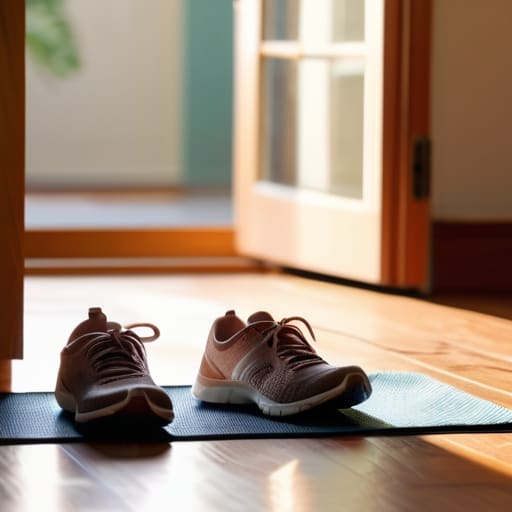
At the end of the day, building a fitness habit isn’t about finding some magical, high-intensity program that transforms you in a week. It’s about the systems we discussed: understanding the psychological triggers that make movement automatic, setting goals that don’t leave you feeling defeated by Wednesday, and stripping away the unnecessary friction that keeps you on the couch. If you can master the small, repeatable wins, the larger results will eventually take care of themselves. Remember, you aren’t looking for a temporary sprint; you are trying to optimize your lifestyle for the long haul.
I spent years trying to “brute force” my way into being healthy, treating my body like a piece of buggy software that just needed more willpower to run correctly. It never worked. The real breakthrough came when I stopped fighting my own nature and started building routines that actually fit into my real, messy life. Don’t let the pursuit of a perfect routine become another source of stress. Just pick one small movement, make it part of your system, and stay consistent. We aren’t aiming for perfection here—we’re just aiming to be better than we were yesterday.
Frequently Asked Questions
What do I do on the days when my schedule completely falls apart and I can't hit my planned workout?
Look, life happens. A meeting runs late, the car won’t start, or you’re just plain exhausted. When the system breaks, don’t scrap the whole day. Instead, pivot to a “minimum viable workout.” If you can’t hit the gym for an hour, do ten minutes of bodyweight squats in your living room. The goal isn’t intensity on these days; it’s maintaining the neurological pattern. Keep the streak alive, even if it’s just a tiny spark.
How do I stop feeling guilty about skipping a day without letting it spiral into a week of inactivity?
Look, I’ve been there. You miss a Tuesday, and by Friday, you’ve basically declared your fitness journey dead. That’s a failure of your system, not your willpower. Stop treating a single missed session like a broken circuit; it’s just a momentary glitch. The goal isn’t a perfect streak—it’s minimizing the downtime. If you miss a day, don’t try to “make it up” with a grueling double session. Just show up for the next scheduled slot. Keep the momentum moving.
I’m not a "gym person"—are there ways to build this habit without actually joining a fitness center?
Look, I get it. The fluorescent lights and the smell of rubber mats in a commercial gym feel like a chore, not a lifestyle. If you aren’t a “gym person,” don’t force it. That’s just adding unnecessary friction. Instead, treat your environment like a system. Use bodyweight exercises during a podcast, take a brisk walk during your lunch break, or grab some kettlebells for your living room. The goal is movement, not a membership card.
How do I know if I'm actually making progress if I'm not tracking every single calorie or pound?
Look, if you’re obsessing over every calorie, you’re just creating more friction. I’ve been there—staring at spreadsheets until my eyes bled. Instead, look for “lifestyle indicators.” Are your clothes fitting differently? Is your energy more consistent throughout the afternoon? Do you find yourself moving more easily during daily tasks? These are your qualitative metrics. If the systems of your life are running smoother and you feel better, the progress is real. Trust the trend, not the daily fluctuation.