
I spent most of my early twenties sitting in a dimly lit apartment, staring at a monitor while my brain felt like it had fifty browser tabs open at once. I used to think I just lacked willpower, so I’d buy every expensive “productivity planner” or high-tech gadget on the market, hoping one of them would finally teach me how to focus while studying. It was a complete waste of money. The truth is, focus isn’t some mystical state you summon with a $30 candle or a subscription to a meditation app; it’s about minimizing the friction between your brain and the task at hand.
I’m not here to sell you on a lifestyle overhaul or a complicated 12-step system that takes more time to maintain than the actual work. Instead, I want to share the small, structural adjustments I’ve learned through years of trial, error, and a lot of late-night troubleshooting. We’re going to look at how to strip away the digital noise and build a sustainable workflow that actually works for your biology. No fluff, no hype—just practical ways to get your head in the game so you can finish your work and get back to your real life.
Table of Contents
Minimizing Study Distractions Without the Drama

Most people approach distraction as a willpower problem, but I’ve learned it’s almost always a systems problem. You can’t just “try harder” to ignore a buzzing phone; your brain is literally hardwired to notice it. Instead of fighting an uphill battle, focus on an effective study environment setup that removes the choice entirely. This means your phone isn’t just face down—it’s in another room, or at least in a drawer. If you can’t see it, the urge to check it drops significantly. I also swear by clearing my physical workspace of everything except what I actually need for the task at hand. A cluttered desk is just visual noise that eats away at your mental bandwidth.
Beyond the physical space, you have to manage your internal noise. This is where understanding cognitive load and learning becomes a game changer. If you’re trying to memorize complex formulas while a podcast plays in the background, you’re essentially asking your brain to run two heavy programs on a single processor. It’s going to crash. To keep things streamlined, I treat my focus like a finite resource. I use a timer to create strict boundaries, ensuring that when I’m working, I’m actually working, rather than just sitting in a chair staring at a textbook.
Using the Pomodoro Technique for Students to Stay Steady
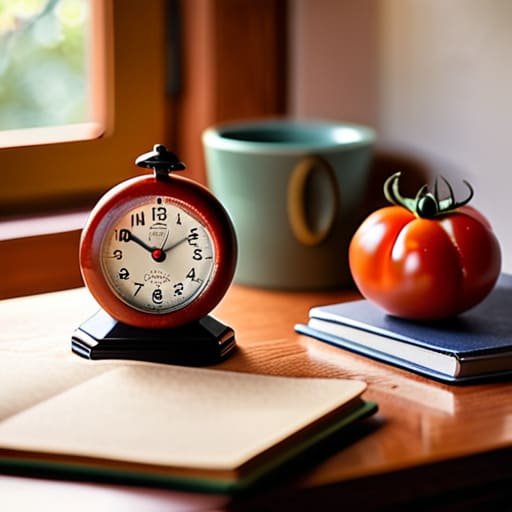
Look, I’m a big believer in systems, but I’ve also learned that trying to white-knuckle your way through a four-hour study marathon is a recipe for burnout. Your brain isn’t a machine; it’s a biological processor with limited bandwidth. This is where the pomodoro technique for students actually becomes useful. Instead of staring at a textbook until your eyes glaze over, you work in short, intense bursts—usually 25 minutes—followed by a mandatory five-minute break. It sounds simple, maybe even a bit cliché, but it works because it creates a sense of urgency while respecting your natural mental limits.
The magic isn’t just in the timer, though; it’s in how you manage the transitions. When you’re in that 25-minute window, you go deep. But when that timer dings, you actually step away. Don’t just switch from your textbook to scrolling through TikTok; that doesn’t give your brain the reset it needs. Instead, stand up, stretch, or grab some water. By pacing yourself this way, you’re effectively managing your cognitive load and learning capacity, ensuring that the information actually sticks rather than just washing over you. It’s about working with your biology, not against it.
Low-Friction Hacks to Keep Your Brain on Track

- Treat your phone like a distraction machine, not a tool. Put it in another room or at least in a drawer. If it’s within arm’s reach, your brain is subconsciously spending energy not checking it, and that’s energy you need for your coursework.
- Curate a “focus soundscape.” I’ve found that lyrical music is a trap—it engages the language part of your brain that you need for reading. Stick to lo-fi beats, brown noise, or even the hum of a fan to drown out the world without adding mental clutter.
- Stop relying on your memory to hold onto tasks. If a random thought pops up—like “I need to email Dave”—don’t chase it down a rabbit hole. Write it on a single “distraction pad” next to you and immediately get back to the task at hand. You can deal with Dave later.
- Optimize your physical workspace for a single purpose. If you study in bed, your brain thinks it’s time to sleep. If you study at a desk, it knows it’s time to work. Keep that desk clear of everything except what you actually need for the current session.
- Use “active recall” instead of passive reading. Highlighting text feels productive, but it’s usually just a way to avoid the hard work. Close the book and try to explain the concept out loud to an empty room. If you can’t explain it simply, you haven’t actually learned it yet.
## The System Over the Willpower
“Stop waiting for a burst of motivation to carry you through a four-hour study session; willpower is a finite resource that’ll fail you when you’re tired. Instead, build a system—a clean desk, a single tab open, and a set timer—so you don’t have to think about starting, you just do.”
Nathaniel 'Nate' Brooks
Getting It Done

At the end of the day, focusing isn’t about having some superhuman willpower; it’s about building a system that makes it easier to succeed. We’ve talked about clearing the physical and digital clutter to stop the constant context-switching, and we’ve looked at how the Pomodoro technique can turn a daunting mountain of work into manageable, timed sprints. If you can implement even two of these tweaks—maybe just putting your phone in another room and setting a timer—you’ve already outperformed most people who are just trying to power through the chaos. It’s about reducing the friction between you and your goals so you aren’t constantly fighting an uphill battle against your own environment.
Don’t get hung up on the idea that you need to master every single technique by tomorrow morning. I spent years trying to optimize every second of my life before I realized that consistency beats intensity every single time. Some days your focus will be razor-sharp, and other days you’ll feel like you’re wading through molasses. That’s fine. The goal isn’t to be a productivity robot; it’s to have a reliable toolkit you can lean on when things get heavy. Start small, refine your system as you go, and remember that progress is better than perfection. Now, close this tab and go get to work.
Frequently Asked Questions
What do I do when I hit a mental wall and the Pomodoro timer just isn't working anymore?
When the timer stops being a tool and starts feeling like a drill sergeant, stop fighting it. You’ve hit a wall because your brain is out of fuel, not out of discipline. Step away from the desk entirely. Go for a ten-minute walk without your phone, grab a glass of water, or do some quick stretching. Don’t scroll social media—that’s just more mental noise. Reset your physical state, and only come back when the friction feels manageable again.
How can I stay focused if my study environment is naturally loud or chaotic?
If you can’t control the noise, you have to control your sensory input. I’ve learned the hard way that trying to “power through” a loud roommate or a busy cafe is a losing battle. Invest in a solid pair of noise-canceling headphones—it’s the best ROI you’ll ever get for your productivity. If that’s too much, try brown noise; it’s deeper than white noise and does a better job of masking sudden, sharp sounds.
Is it actually better to listen to music, or am I just creating another distraction for myself?
It’s a double-edged sword. If you’re blasting lyrical pop, you’re basically just multitasking poorly; your brain is fighting to process the words while trying to parse your textbook. That’s friction. For me, the sweet spot is low-stimulus audio—lo-fi beats, ambient rain, or even brown noise. You want a consistent sonic wallpaper that masks background chaos without demanding your cognitive attention. If it makes you want to sing along, turn it off.
How do I stop the urge to check my phone every time I hit a difficult problem in my notes?
That urge is just your brain looking for an easy dopamine hit to escape the discomfort of a hard problem. It’s a reflex, not a lack of willpower. To break it, you need to increase the friction. Put your phone in another room—not just face down, but physically out of reach. When that itch hits, grab a scrap piece of paper and doodle the frustration instead. It keeps your hands busy without breaking your flow.